Why depression can leave you exhausted after 10 hours of sleep
How depression can involve oversleeping and unrefreshing sleep, what other sleep problems to consider, and how to rebuild a rhythm.

- Time in bed isn’t the same thing as restorative sleep, and the gap between them is where most of this lives.
- The experience is real, but one symptom, or one label you found online, can’t establish a diagnosis.
- Small supports work best when they target the exact point where the pattern breaks down.
- Persistent impairment, medical concerns, or safety risks deserve a professional assessment.
The alarm goes off after 10 hours. Ten. And your body responds like someone’s asked you to move a piano before breakfast, up a flight of stairs, alone.
So you sleep later Saturday to catch up, later again Sunday, and then Sunday night won’t cooperate with any of it.
Depression can involve insomnia or oversleeping. Long sleep can also accompany sleep apnea, circadian rhythm problems, medication effects, substance use, medical illness, or primary sleep disorders. That list matters, so don’t skip past it.
Hours in bed and hours of sleep are different numbers
Time in bed isn’t identical to restorative sleep. Fragmented breathing, irregular timing, low daytime light, little activity, and long naps can each weaken sleep quality or timing. Depression can also make bed the easiest place to avoid a day that isn’t offering you much.
The answer isn’t simply forcing yourself to sleep less. Severe daytime sleepiness, snoring, breathing pauses, morning headaches, sudden sleep episodes, or safety problems need a clinical evaluation, not more willpower.
- More sleep barely moves your energy.
- Wake time drifts later across the week.
- Naps make nighttime sleep less predictable.
- Bed has become the main venue for scrolling, worrying, and withdrawing.
More time in bed isn’t always more sleep
Depression can involve sleeping too little or too much. Long sleep can still be fragmented, badly timed, or padded with stretches where you’re just lying awake. You can spend 10 hours under the covers without collecting 10 hours of restorative sleep.
Bed can also be the lowest-friction place to avoid a day that feels unrewarding. That doesn’t make the sleepiness fake. It means biology, behavior, and mood are all reinforcing each other, which is a harder problem than any one of them alone.
So notice which you’re actually doing: asleep, drifting, scrolling, worrying, or hiding from demands. Each one asks for a different response.
Persistent sleepiness deserves a differential
Sleep apnea, restless legs, circadian rhythm disorders, narcolepsy, idiopathic hypersomnia, medication effects, substances, medical illness, and plain insufficient sleep can all overlap with depression. A mood diagnosis shouldn’t end the sleep assessment. I’ll say that plainly, because it ends the assessment constantly.
Report loud snoring, witnessed breathing pauses, morning headaches, dry mouth, leg sensations, sleep paralysis, sudden loss of muscle tone, or irresistible sleep episodes. And don’t drive or operate machinery when sleepiness makes it unsafe.
A sleep diary or a formal sleep evaluation is usually worth more than another promise to go to bed earlier. The right test depends on your history.
Wake time is the anchor, not bedtime
A consistent wake time gives your body clock a repeated morning signal. Keep it realistic, weekends included, instead of picking a heroic hour that’ll survive two days before collapsing.
Get outdoor light soon after waking if you can, eat at a regular time, add gentle movement. Those cues start organizing the day well before bedtime becomes predictable.
If you need to shift a severely delayed schedule, do it with clinical guidance. Light timing and sleep timing can affect mood, and a bipolar history changes the safety conversation entirely.
Separate naps from rescue missions
A short planned nap may help some people. Long or late ones drain sleep pressure and make the night harder. They’re not equivalent. Record the timing and the effect rather than declaring all naps good or bad.
Before you go back to bed, ask what problem the bed is solving. If the answer is hunger, anxiety, loneliness, pain, or an overwhelming task, deal with one piece of that first.
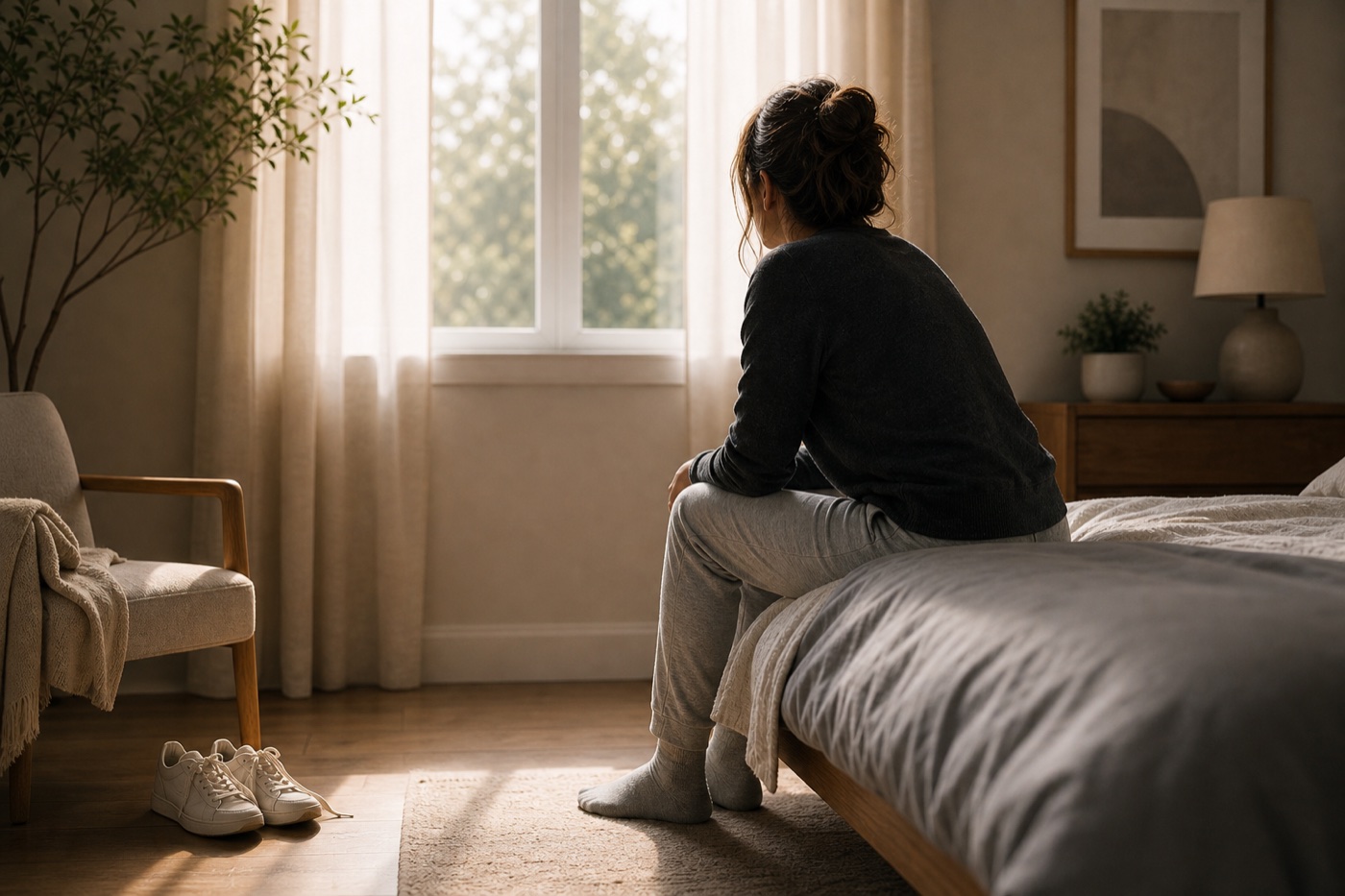
Set up another low-demand resting place if you can. A chair, a couch, a blanket by a window. You get to recover without teaching the bed that it hosts the entire day.
Review medications and substances carefully
Sedating medications, alcohol, cannabis, antihistamines, and other substances can change sleep architecture or daytime alertness. Stimulants and caffeine can mask sleepiness for a while and quietly wreck the next night’s timing.
List everything you take, over-the-counter sleep products included, and bring the timing in. It’s the timing that tells the story. Don’t stop psychiatric medication abruptly or start combining products based on an online sleep stack.
If the oversleeping started after a medication change, that sequence is clinically useful. It doesn’t prove the medication is the only cause.
Track function, not moral worth
For two weeks, record sleep attempt, estimated sleep, wake time, naps, morning light, substances, and daytime sleepiness. Add whether you’ve missed school, work, meals, driving, or relationships because of sleep.
Seek care when long sleep is persistent, unrefreshing, or unsafe, or when it comes with depression, hopelessness, or a major change in function. Severe withdrawal, confusion, or suicidal thinking needs urgent help.
Tomorrow, keep one planned wake time and put your first action within arm’s reach. Open the curtain, drink water, sit upright. Do that before you decide what the whole day means.
The details that make the plan hold up
Tell difficulty waking apart from a true need for unusually long sleep. Some people wake repeatedly, stay in bed because moving feels impossible, or go back under to avoid the day. Others sleep straight through and still get flattened by daytime sleepiness. That’s a different problem. Describe the pattern instead of reporting only the hours.
Use alarms to support a wake plan, not to stage a 90-minute argument with yourself. Put one alarm where you have to sit up, pair it with light, and arrange accountability if you need it. Repeated snoozing fragments the last stretch of sleep and opens the morning with a stack of small defeats.
Weekends deserve attention. Sleeping several hours later can feel like relief while shifting your body clock and ruining Sunday night. If the sleep debt is severe, the fix may be more adequate sleep across the whole week rather than a dramatic social jet lag cycle.
Ask your clinician what improvement should look like. Fewer hours, easier waking, less daytime sleepiness, and better function are related but genuinely distinct outcomes. A treatment can move one and leave another. Clear targets make follow-up more useful than “I guess I’m still tired.”
If someone shares the room, ask what they notice without putting them in charge of the diagnosis. Snoring, gasping, restless movement, repeated alarms, and difficulty waking are all useful evidence. Their report supplements your experience; it doesn’t replace a formal sleep assessment when one’s indicated.
Keep the bedroom consistent: dark enough for sleep, comfortable, and free of work where possible. If safety, housing, or caregiving makes that impossible, say so. Sleep recommendations should fit the actual room and the actual responsibilities, not an idealized bedroom in a brochure.
Morning medication timing may affect alertness, and some medicines have to be taken with food. Ask the prescriber or pharmacist how the timing should work rather than moving doses around yourself. A small schedule change can have interactions no article can assess.
If waking feels emotionally unbearable, put one human contact right after the alarm. A brief call, breakfast with someone, a dog walk, a ride to work. That’s an external reason to cross the transition, and it doesn’t require you to feel enthusiastic.
Celebrate regularity before earliness. Waking at a stable, reasonable time beats alternating between a punishing early alarm and noon. Once the rhythm’s dependable, you can adjust further with much better information.
And talk about how much sleep your age, health, work, and caregiving realistically allow. A recommendation that ignores a newborn, a night shift, unsafe housing, or chronic illness won’t survive contact with the week. A clinician can help separate not enough opportunity from genuinely excessive sleep need.
Try one small experiment today
For one week, keep your wake time inside the same 30-minute window and note morning light, naps, and energy. Don’t drive if you’re dangerously sleepy.
- Keep a consistent wake time and get morning light.
- Use the bed mostly for sleep when you can.
- Track naps, substances, medication timing, and snoring.
- Ask about a sleep evaluation when the symptoms persist.
The bottom line: Oversleeping can be a symptom, a coping strategy, or a clue pointing at another sleep problem entirely. Build a wake-time anchor and get persistent sleepiness investigated. It isn’t a character issue, and treating it like one has never woken anybody up.
Sources: National Institute of Mental Health, “Depression,” including oversleeping and sleep changes; National Institute for Health and Care Excellence, “Depression in adults: treatment and management” (NG222, reviewed 2026); Steinan and colleagues, “Residual hypersomnia in unipolar and bipolar depression,” Sleep Medicine Reviews (2024).
More than sadness: signs worth taking seriously.
Depression often looks like exhaustion, irritability, or numbness, not just tears. The signs worth taking seriously, when to seek help, and what actually treats it.

Why depression can make everything feel physically heavy
How depression can drain energy and slow ordinary tasks, what else fatigue may mean, and how to begin without waiting for motivation.

What to expect at your first visit.
What we ask, what we don’t, what you leave with, and how to make your first telehealth psychiatry visit count. A quick, plain-language guide from Sigma Psychiatry.
Would a clearer evaluation help?
A free 15-minute intro call can help you decide whether a psychiatric evaluation makes sense.