How do you help someone after a traumatic event?
How to support someone after trauma without forcing disclosure, taking over, or mistaking normal stress reactions for a diagnosis.

- There’s no single right way to help after trauma, so context and how things change over time matter more than any script.
- An article can name patterns, but it can’t diagnose anyone or replace a medical and psychiatric evaluation.
- Practical support works best when it protects safety, choice, sleep, and connection to qualified care.
- Immediate danger, not being able to stay safe, or rapidly changing medical or psychiatric symptoms needs urgent help.
It’s been two days. You open the thread, type “How are you?”, and delete it, because the question has somehow grown to the size of a building.
You try “Let me know if you need anything.” Then you picture your friend looking at 47 unanswered messages and a refrigerator containing mustard, and you delete that too.
Here’s the part I want you to hear before anything else: after trauma, support has very little to do with finding the perfect sentence. It’s about being predictable, practical, and safe. Those are things you can do clumsily and still get right.
Start with needs, not the story
Some people want to talk. Others don’t, or can’t yet put the experience into words at all. So don’t push for details, don’t investigate inconsistencies, and don’t treat disclosure as proof that they trust you. You can just say, “You don’t have to tell me what happened. Would food, company, a ride, or quiet be useful today?”
Offer bounded help. “I can bring dinner at six or pick up groceries tomorrow” is far easier to answer than “anything.” And respect a no. Trauma often involved losing choices, so handing a few back is the actual work here.
Trauma reactions are adaptations, not personality defects
After danger, the mind and body may keep running strategies that were protective during the event. Attention scans faster. Sleep gets lighter. Memories arrive in fragments, or with far too much force. Feelings may go quiet so a person can keep moving. Those reactions are confusing once the danger has passed, but they aren’t evidence that anybody is weak, dramatic, or permanently damaged.
They also don’t automatically mean post-traumatic stress disorder. Many people have distressing reactions after trauma and improve with time, safety, practical support, and ordinary routines. Clinicians look at the type, duration, intensity, and impact of symptoms, along with other possible explanations. An article can help you recognize a pattern. It can’t tell you which diagnosis, if any, fits a life. Normal short-term stress reactions still deserve care without getting converted into a diagnosis by Tuesday.
You don’t have to be the entire response team
Help with appointments, childcare, paperwork, or a calm walk if you’re invited. Encourage professional care when symptoms persist or safety is uncertain. Don’t prescribe exposure, don’t insist on forgiveness, and don’t promise confidentiality if someone may be in immediate danger.
Keep your own limits, too. A friend can be steady without being available every hour, and steady is what’s actually useful. Sustainable support beats heroic overextension followed by a disappearing act. Support should return choice to the survivor rather than turning you into an incident commander.
The goal isn’t to erase the past
Recovery gets described as “getting over it,” which makes healing sound like efficient luggage handling. A more useful goal is helping the past stay in the past. The memory may remain important. It just doesn’t need to interrupt every meeting, every relationship, every night of sleep, and every trip to the grocery store.
Evidence-supported trauma-focused psychotherapies include cognitive processing therapy, prolonged exposure, and eye movement desensitization and reprocessing. They work through somewhat different methods, and the choice should account for goals, readiness, health, culture, current safety, and other conditions. Medication may be part of care for some people, but decisions about starting, changing, or stopping it belong with a clinician who can actually evaluate the person.
Good trauma care is collaborative. It doesn’t require surprise disclosures, forced forgiveness, or proving how much distress somebody can tolerate. A clinician should explain the rationale, discuss pacing, monitor safety, and help build a plan for the reactions that show up between sessions.
The alarm is protecting something. Find out what.
A useful assessment looks past the worst moment. What happens right before the reaction? What comes next? What brings short-term relief, and what does that relief charge tomorrow? Avoidance, checking, reassurance, isolation, overwork, and substance use all make sense as attempts to reduce distress. They can also keep the mind from ever learning that the present is different.
Start with function, not blame. If staying busy prevents every quiet memory, that schedule is doing emotional anesthesia. If checking every lock takes an hour, the ritual is buying certainty that never lasts the night. If someone goes numb during conflict, the response may preserve immediate safety while making repair much harder later. Naming a behavior’s job is what lets you and a clinician find a replacement that can do the same job for a lower price.
Recovery needs ordinary foundations, too. Regular meals, movement, sleep opportunity, safe social contact, and reduced alcohol or drug use don’t cure PTSD. They give treatment steadier ground to stand on. Be suspicious of any plan that treats basic care as a test of deservingness. Missing a walk doesn’t explain trauma symptoms, and finishing one doesn’t cancel the need for evidence-based care.
If you’re helping someone find treatment, ask whether the clinician regularly treats trauma, which approaches they use, how they handle dissociation or other conditions, and how progress gets measured. A good answer sounds more specific than “we’ll talk and see.”
Make the next step small enough to actually happen
When you’re scared, exhausted, or afraid of saying the wrong thing, broad advice turns into one more demand. Pick a next step that can happen today and that doesn’t require certainty about the diagnosis or the rest of anybody’s life. For early trauma support, food, transportation, privacy, and follow-through matter more than perfect words.
- Offer two specific kinds of help and an easy way to decline.
- Follow the person’s pace about details.
- Check in again after the first wave of attention fades.
Write things down rather than relying on memory at the most intense moment. Sleep, substances, medications, physical symptoms, triggers, effects on daily life. Bring that short record to a clinician. Useful care starts with a pattern that’s honest enough to work with.
Know when this needs more than a coping tip
Seek professional help when reactions persist, intensify, interfere with sleep, school, work, relationships, or health care, or lead someone to lean on alcohol or drugs to get through the day. Sudden confusion, a new neurological symptom, serious injury, or a medical concern after a traumatic event needs prompt medical assessment.
If you or they might hurt yourself or someone else, can’t stay safe, or are in immediate danger, call 911 or go to an emergency department. In the United States, call or text 988 for crisis support. And if an abusive person still has access, focus on immediate safety and specialized support instead of trying to process the trauma while the danger is still live.
Try one small thing today
Send one low-pressure message: “No reply needed. I can bring dinner Thursday or handle one errand this weekend.” That’s it. No follow-up question, no request for an update.
You’re not trying to solve the whole thing by yourself. You’re creating one piece of information, safety, or connection that makes somebody’s next decision less lonely.
Afterward, notice what changed and what didn’t. A small experiment is useful even when it doesn’t make anyone feel immediately better. It can show which part of the pattern is flexible, which support is missing, and which question deserves a clinician’s attention. Keep the result descriptive rather than turning it into a verdict about how good a friend you are.
The bottom line: After trauma, practical choice and reliable presence usually help more than advice does. Don’t force the story, keep safety clear, and support access to professional care when it’s needed.
Sources: National Institute of Mental Health, “Traumatic Events and Post-Traumatic Stress Disorder”; U.S. Department of Veterans Affairs National Center for PTSD, “PTSD Basics,” “Common Reactions After Trauma,” and “Coping with Traumatic Stress Reactions.”

Why can closeness feel unsafe after trauma?
Why affection and trust may trigger alarm after trauma, how boundaries differ from avoidance, and how connection can rebuild.

Why your body can freeze during conflict
Why your body can freeze during conflict, how involuntary shutdown differs from stonewalling or coercive silence, and what helps.
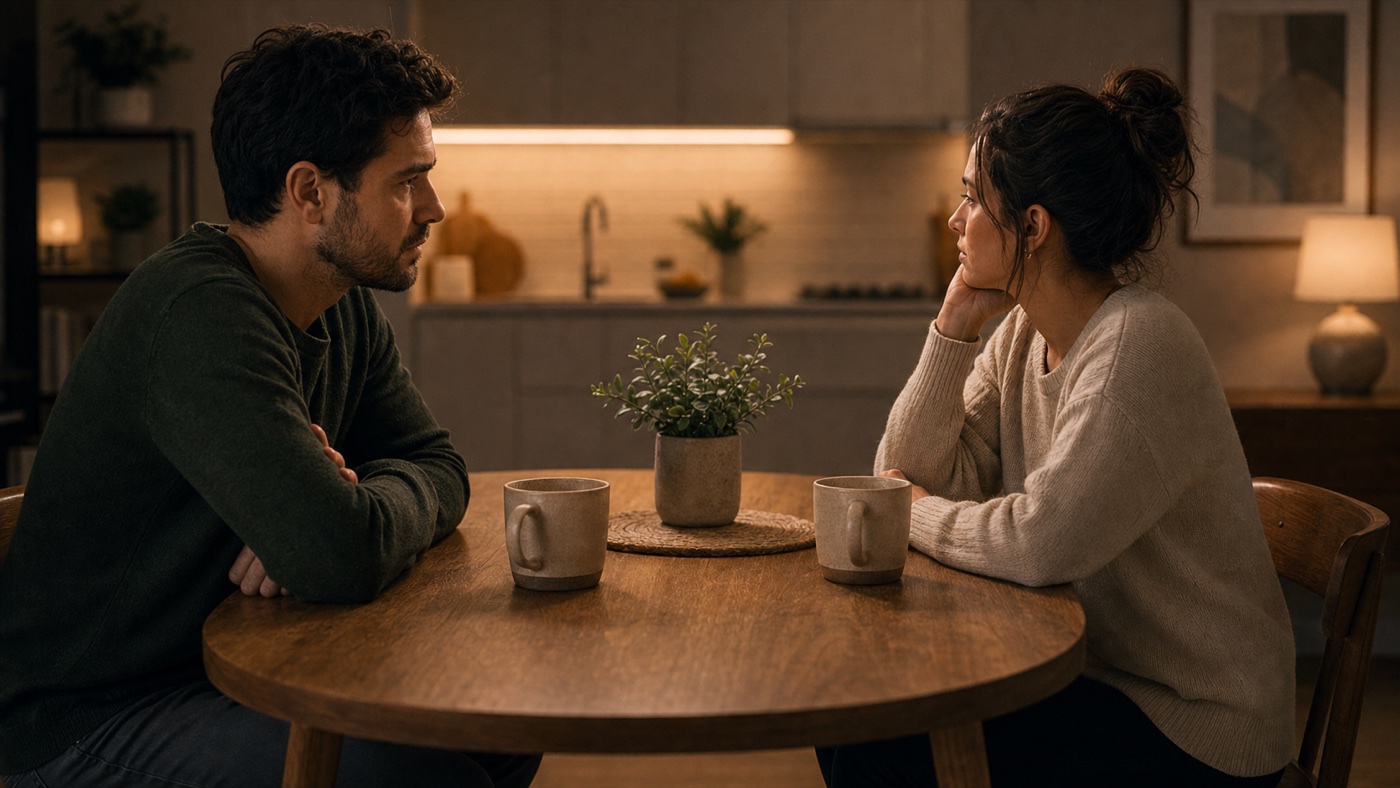
Why you keep having the same fight.
Different words, same fight, on a loop. Why couples recycle the same argument, what is really underneath it, and how to break the cycle.
Want help deciding what kind of care makes sense?
A free 15-minute intro call can help clarify whether a psychiatric evaluation is the right next step.